
A lot of the decks we get called out to inspect around Marietta are 12, 15, even 20-plus years old, built during a wave of construction that predates a lot of today's fastener and flashing standards. Some just need cosmetic attention — a cleaning, a sand, a fresh coat of stain. Others have a real structural problem hiding under a coat of paint that looks fine from ten feet away. Our job on every repair call is to tell the difference honestly, and tell you plainly which one you are dealing with.
We inspect and repair decks throughout Marietta and Cobb County, from older homes near the Square with decks that predate current code to newer builds out toward Kennesaw or East Cobb where a single bad storm or a footing issue in our red clay soil caused damage well before the deck's expected lifespan should have been up. Whatever the cause, you get a written assessment and a clear recommendation, not a sales pitch dressed up as an inspection.
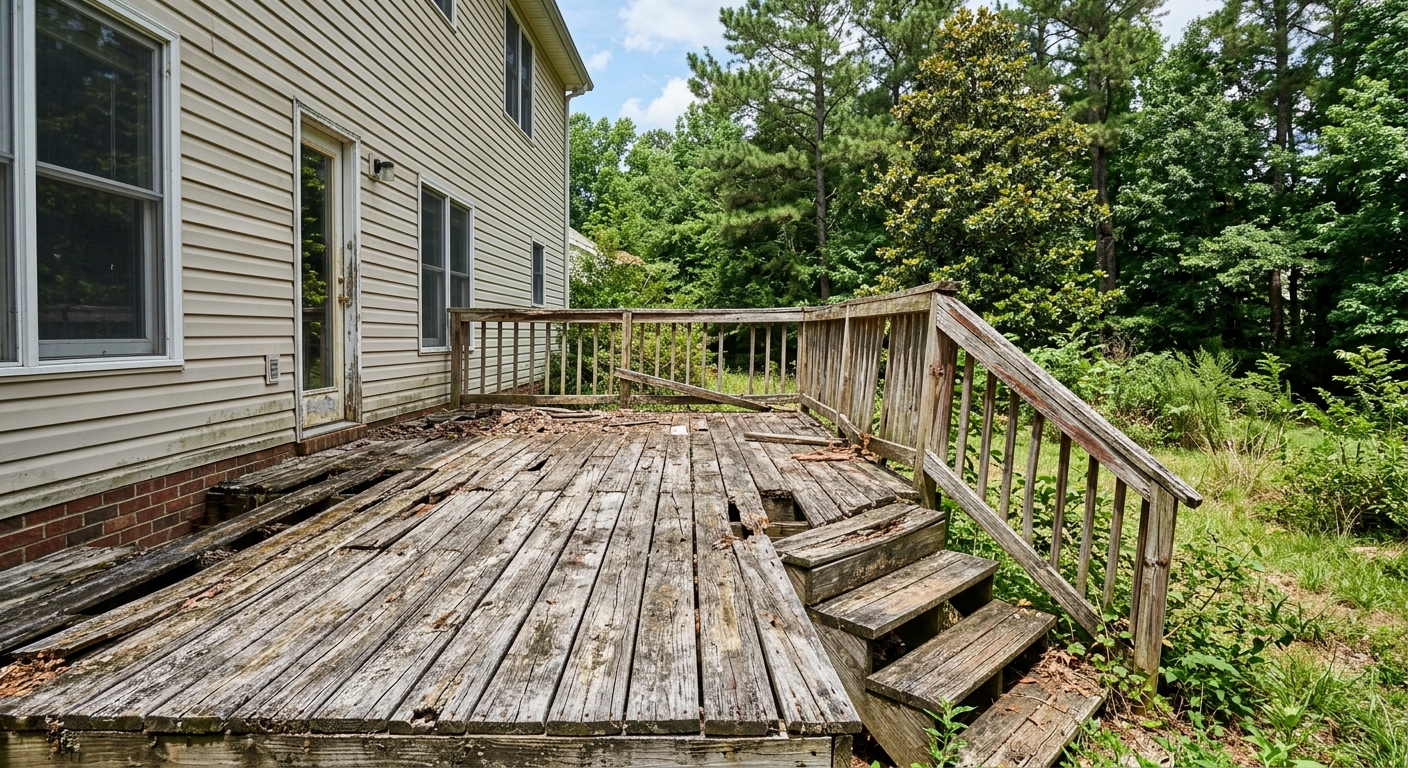
What Actually Fails on an Aging Marietta Deck
The ledger board — the piece that attaches the deck to the house — is one of the most common failure points we see, especially on older decks where flashing was never installed correctly or has worn through over the years. Water gets behind the ledger, the wood rots from the inside out, and by the time it's visible from the outside the damage has usually been progressing for a while. Footings are the other frequent culprit: Cobb County's red clay soil moves more than people realize, expanding when it's saturated and pulling hard when it dries out, and a footing that was undersized or poured too shallow originally can shift enough over the years to throw the whole structure slightly out of level.
Railings loosen at the posts more often than most homeowners expect, usually from repeated freeze-thaw cycles working the fasteners loose rather than any single dramatic event. And plain old sun exposure does what it always does to unsealed or under-maintained wood — graying, splintering, and eventually softening the surface fibers enough that a board that looks intact fails a simple push test.
Repair vs. Replace — How We Actually Decide
Isolated problems — a handful of rotted boards, a loose railing section, surface staining — are usually straightforward, affordable repairs that restore the deck without touching the rest of the structure. The calculus changes once rot or structural failure has reached the ledger board, the main support beams, or more than one or two footings. At that point, patching around the problem just delays a bigger failure and often costs more over a few years of repeated small fixes than a single honest rebuild would have. We would genuinely rather tell you that up front and lose a smaller repair job than talk you into a patch job we know won't hold.
Get a Free Deck Inspection & Repair Quote
Free, no-obligation on-site inspections anywhere in Marietta and Cobb County.
📞 Call 470-327-9145
Cosmetic Restoration for a Deck That's Just Aged Poorly
Not every tired-looking deck needs structural work. A deck that's sound underneath but gray, faded, and rough to the touch usually responds extremely well to a thorough cleaning, sanding back to fresh wood, and a new coat of quality stain or sealant. It's one of the more satisfying jobs we do, because the transformation from a neglected-looking deck to something that looks close to new again happens in a matter of days, not weeks, and at a fraction of the cost of a rebuild. Our composite deck maintenance guide is aimed at composite owners specifically, but the seasonal-upkeep mindset behind it applies just as well to keeping a freshly restored wood deck looking good going forward.
When Restoration Turns Into an Upgrade Opportunity
Sometimes a repair call turns into a bigger conversation. If your existing frame is structurally sound but the decking boards themselves are what's failing, that's often the right moment to consider resurfacing with composite decking instead of replacing like-for-like with more wood that will eventually need the same attention again. Or, if the deck has always felt exposed to sun and bugs, a repair project is a natural point to talk about adding a pergola or cover at the same time, since some of the structural work overlaps. We'll flag these options when they make sense, but never push them if a straightforward repair is genuinely what the deck needs.
Permits for Repair Work
Cosmetic work like cleaning, sanding, and refinishing does not require a permit. Structural repairs touching footings, the ledger board, or main framing generally do, through the City of Marietta or Cobb County, and skipping that step on real structural work is a problem that tends to surface at the worst possible time — during a home sale inspection. We handle the permit whenever the scope of repair calls for one. Our Marietta deck permit guide explains what inspectors actually look for if you want more detail before we start.
What a Deck Inspection Actually Covers
A thorough inspection is more than a walk across the boards. We check every visible footing for cracking or movement, probe the ledger board connection for soft spots with a screwdriver rather than just looking at it, test railing posts for lateral movement, and look underneath the deck at the joists and beams where rot often starts long before it's visible from above. We also check flashing at the house connection, since that single detail is behind more hidden rot damage than almost anything else on an older Marietta deck.
You get a written summary of what we find, photos of anything concerning, and a plain explanation of what's cosmetic versus what's structural — the same information we'd want if we were the ones deciding whether to spend money on our own deck.
Deck Repair & Restoration FAQs — Marietta, GA
The clearest signs are soft or spongy boards, ledger board separation from the house, wobbly railing posts, or footings that have visibly shifted in our red clay soil. We inspect the full structure, not just the surface, and give you a straight repair-or-replace recommendation with the reasoning behind it, not just an upsell.
Small repairs like replacing a handful of boards or tightening railing can run a few hundred to about $1,500. Larger structural repairs involving ledger boards, footings, or major framing typically run $2,500 to $8,000 or more. We give you a written, itemized estimate after inspecting the deck in person, at no charge.
It depends on how far the rot has spread. Isolated rot in a few boards or a single post is usually a straightforward repair. Rot that has reached the ledger board, main support beams, or multiple footings is a safety issue and typically means a rebuild is the more honest recommendation, since patching around structural rot just delays a failure.
Sun-faded, gray, or splintering wood is almost always a cosmetic issue that a good cleaning, sanding, and refinish can fix. Wobbly railings, soft spots you can feel underfoot, or a ledger board pulling away from the house are structural red flags that mean the deck is not safe to use until repaired, regardless of how it looks.
We recommend a professional inspection at least every 2 to 3 years for a wood deck over 10 years old, and annually for anything over 20 years old, given how much our humidity and red clay soil movement can affect a structure over time. A quick inspection often catches a cheap fix before it becomes an expensive one.
Our red clay soil expands when saturated and contracts hard when dry, and a footing that was not poured deep enough or sized correctly for the original build can shift or heave over years of that cycle. It shows up as a deck that feels slightly uneven, a post that has started to lean, or gaps opening up where the deck meets the house.
Often, yes, if the wood itself is still structurally sound. A thorough cleaning, sanding down to fresh wood, and a new coat of stain or sealant can make a graying, sun-faded deck look close to new again for a fraction of the cost of replacing the decking surface.
If the frame underneath is sound but the decking boards are worn out, resurfacing with composite is a popular upgrade that solves the maintenance problem going forward. If the frame itself has failed, a full rebuild in either wood or composite makes more sense. Our composite and Trex decks page covers what that upgrade involves in more detail.
Minor cosmetic repairs generally do not, but structural repairs involving footings, ledger boards, or framing typically do require a permit through the City of Marietta or Cobb County. We will tell you honestly whether your specific repair needs one and handle the paperwork if it does.
Small repairs like board replacement or railing tightening are often finished in a single day. Larger structural repairs involving footings or ledger board work typically take a few days to a week, and full restorations with sanding and refinishing can take slightly longer depending on drying time between coats.
It depends on the cause. Damage from a specific storm event is sometimes covered, while general wear, rot from age, or lack of maintenance typically is not. We can provide the documentation and photos most insurance companies ask for as part of a claim, but recommend confirming coverage with your provider directly.
Yes, every inspection and repair estimate is free with no obligation anywhere in Marietta and Cobb County. We will walk the full structure with you and explain what we find in plain language before you decide anything.