
Once a Marietta homeowner decides on composite over wood, the next question is almost always some version of "so which brand?" — and the honest answer is that the brand name matters less than understanding what tier of composite you're actually looking at. Trex, TimberTech, and a long list of budget composite manufacturers all sell products that range from genuinely premium to barely-better-than-plastic, often within the same brand's own lineup. Here's how to tell the difference without wading through marketing copy.
Capped vs. Uncapped: The Real Dividing Line
The single biggest quality distinction in composite decking isn't the brand name on the box — it's whether the board is capped or uncapped. Uncapped composite is a solid blend of wood fiber and plastic all the way through, which means the surface is exposed directly to sun, moisture, and mildew, and it can fade, stain, and absorb water at the edges over time in Cobb County's humid climate. Capped composite wraps that same core in a separate polymer shell that resists fading, staining, and moisture absorption far better, at the cost of a higher price per board. Most of the noticeable quality gap between a $4-per-square-foot composite deck and a $10-per-square-foot one comes down to this single manufacturing difference, more than which name is stamped on the board.
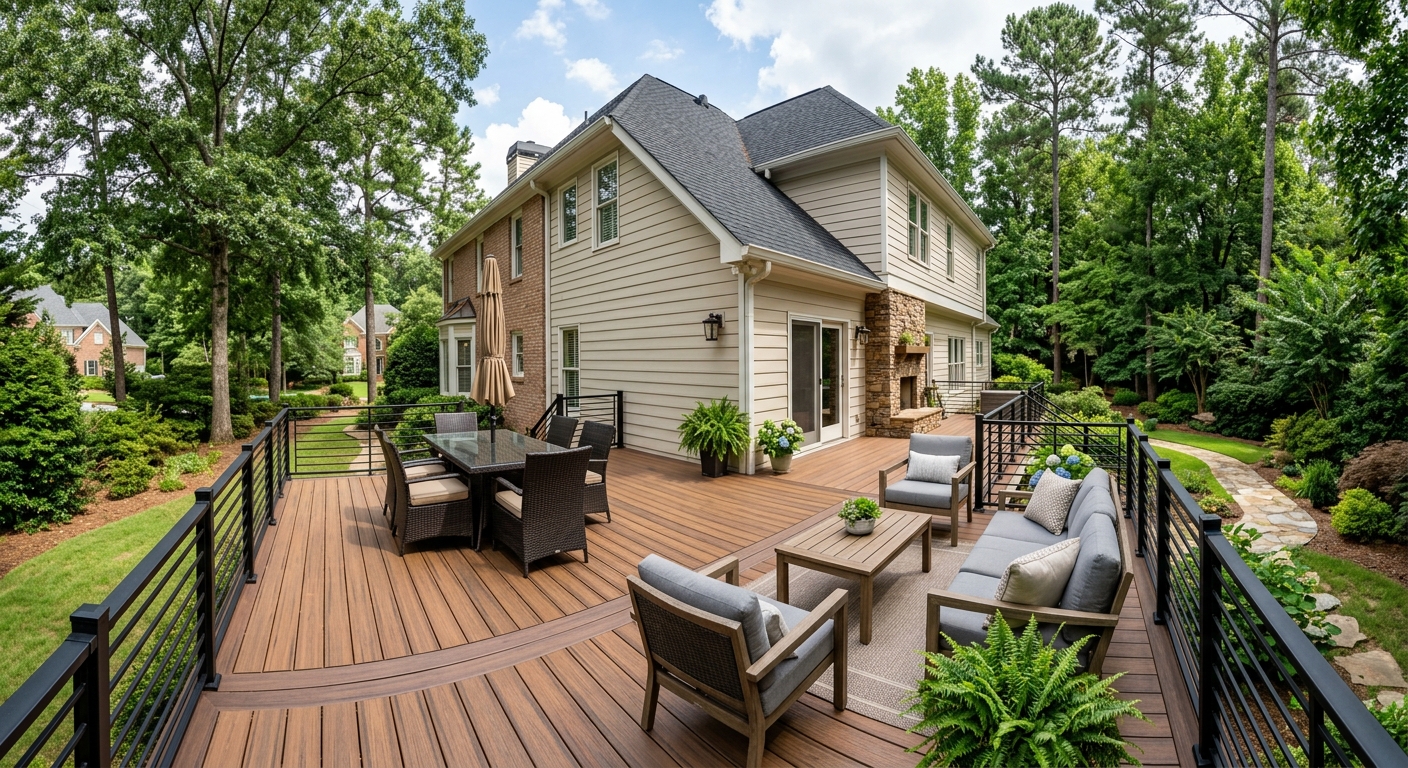
Trex: The Category Pioneer
Trex effectively created the modern composite decking category, and its mid-to-premium lines use fully capped boards with strong fade and stain warranties, typically 25 to 50 years depending on the line. Trex's entry-level products sit closer to the budget tier and are worth reading the warranty fine print on before assuming every Trex board carries the same protection. For homeowners who want a widely recognized name with a long track record and dealer support across Cobb County, Trex remains a safe, well-tested choice through our composite and Trex decking installations.
TimberTech: Premium Positioning
TimberTech, particularly its higher-end AZEK-based lines, tends to sit at the premium end of the capped composite market, with some of the most realistic wood-grain embossing available and warranties that match or slightly exceed Trex's top tier. The tradeoff is price — TimberTech's premium lines typically run at the top of the composite cost range we cover in our Marietta deck cost guide. For homeowners planning to stay in a home long-term and wanting the closest possible look to real wood without the maintenance, it's a strong fit.
Budget and Uncapped Composite: Where It Makes Sense
Budget composite brands and uncapped product lines aren't automatically a bad choice — they make real sense for a smaller secondary deck, a rental property, or a homeowner planning to sell within a few years who wants the low-maintenance selling point without the premium price tag. The tradeoff is a shorter realistic lifespan in Georgia's climate, more visible fading over five to ten years, and typically shorter or more limited warranties. It's a legitimate option as long as it's chosen knowingly rather than mistaken for the same product as a premium capped board at a lower price.
Warranty Differences That Actually Matter
Warranty length numbers on their own can be misleading — what matters more is what's covered. Premium lines from Trex and TimberTech typically cover fading and staining separately from structural or manufacturing defects, sometimes with prorated coverage that decreases over the warranty period. Budget composite warranties are often shorter and narrower, covering manufacturing defects only, with no fade or stain protection at all. Reading the actual warranty document, not just the headline number in a brochure, is worth the ten minutes before committing to a tier.
Not Sure Which Tier Fits Your Deck?
We install across every major composite tier and can lay out real samples side by side before you decide.
📞 Call 470-327-9145Other Names Worth Knowing
Trex and TimberTech get most of the attention, but they aren't the only credible options. Fiberon and MoistureShield both make solidly capped composite lines that often price a step below Trex and TimberTech's premium tiers while still offering meaningful fade and stain warranties. Big-box store composite lines sold under store brands sit closer to the budget tier described above, and it's worth reading the manufacturer name on the warranty card rather than the store name on the shelf tag, since the underlying manufacturer and its warranty terms are what actually matter years down the road.
Color and Grain Pattern Differences
Beyond capped versus uncapped and brand tier, color selection affects both heat absorption and how well a board hides everyday wear. Lighter, weathered-wood-look colors show less dirt and stay noticeably cooler underfoot in direct Georgia sun than solid dark brown or gray boards. Multi-tonal, streaked color patterns — now standard on most premium composite lines — also do a better job disguising the fine scuffs and scratches that accumulate on any deck over years of foot traffic, furniture dragging, and pets.
Matching a Tier to Your Situation
A good rule of thumb: if you're building a forever-home deck in Kennesaw or planning a multi-level or pool deck build where board performance under heat and moisture really matters, lean toward a fully capped premium line. If you're building a smaller, secondary space or working within a tighter budget in Acworth or elsewhere in Cobb County, a mid-tier capped composite board often delivers most of the low-maintenance benefit without the premium price. Whatever tier fits, keeping up with the light seasonal care we cover in our composite deck maintenance guide gets the most life out of any composite board you choose.