
Most homeowners in Marietta start this decision with a single question — composite or wood — and end up needing three answers instead: what it costs today, what it costs over ten summers of Georgia heat, and what it looks like standing on it barefoot in July. Cobb County's climate is genuinely tough on decking, with long stretches above 90 degrees, heavy afternoon humidity, spring pollen that coats everything in yellow-green film, and the occasional ice storm that pressure-treated wood and composite handle in very different ways. Here's how the two materials actually compare once the marketing brochures are set aside.
Upfront Cost: Wood Wins the First Number
Pressure-treated Southern yellow pine remains the cheaper material to buy and install, typically running $4 to $8 per square foot for the decking boards themselves, before labor. Cedar costs more and is chosen almost entirely for its look rather than its durability in this climate. Composite decking, including the lines we install through our composite and Trex decking service, generally runs $6 to $13 per square foot for material, which is why the full breakdown in our Marietta deck cost guide shows composite decks costing noticeably more at the point of signing the contract.
Lifetime Cost: The Gap Narrows or Reverses
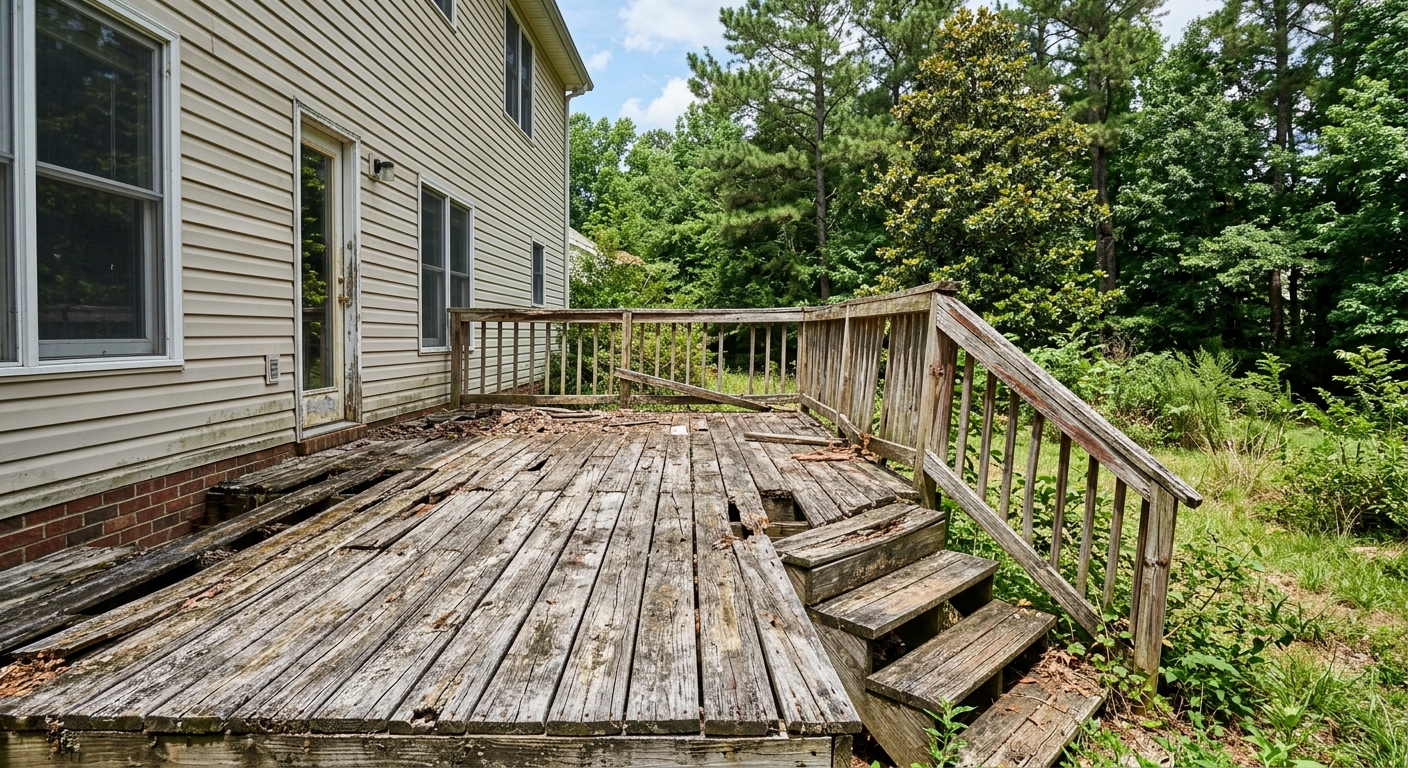
Where the math shifts is over the following decade. A pressure-treated deck needs to be cleaned and re-stained or sealed roughly every 18 to 24 months in this climate to keep moisture out of the wood grain and prevent graying, cupping, and splintering — humidity and afternoon thunderstorms accelerate that cycle compared to a drier climate. Skip a cycle or two and boards start needing individual replacement well before the structure itself is due for retirement. Composite boards, by contrast, don't need staining or sealing at all; the maintenance that remains is lighter and different, which we cover board-by-board in our composite deck maintenance routine for Marietta homes. Add up ten years of stain, sealer, pressure washing, and the occasional board swap on a wood deck, and composite's higher purchase price often ends up costing about the same or less by year eight to ten.
How Each Material Handles Cobb County's Climate
Heat and Humidity
Georgia summers push wood through repeated wet-dry cycles that loosen fasteners and open up checking cracks along the grain over time. Composite doesn't absorb moisture the same way, so it doesn't cup, crack, or splinter from humidity swings — though darker composite boards can get noticeably hot underfoot in direct July sun, which is worth testing with a sample board before committing to a color.
Pollen and Mildew
Every spring, a yellow-green layer of pine pollen settles over every horizontal surface in Cobb County, and it holds moisture against whatever it lands on. On wood, that combination speeds up graying and can encourage mildew in shaded, poorly ventilated corners of the deck. Composite sheds pollen more easily with a simple hose-down, though it isn't immune to mildew in deep shade either — both materials need the same basic airflow consideration underneath the structure.
Ice and Cold Snaps
Cobb County doesn't see harsh winters, but the occasional ice storm does happen, and both materials handle a light ice load fine structurally. The bigger winter risk for wood is freeze-thaw cycling working moisture into any unsealed cut ends or fastener holes; composite has no grain for that moisture to exploit.
Look, Feel, and Resale
Wood still has a warmth and a slightly springy feel underfoot that some homeowners prefer, and a freshly stained cedar or pressure-treated deck looks genuinely great — for the first year or two. Composite has closed the visual gap significantly with realistic wood-grain embossing, and the color holds for the life of the board instead of fading within a season. On resale, buyers increasingly read composite decking as a maintenance-free upgrade worth paying for, while a wood deck that looks tired can actually work against a listing. If you're trying to decide between decking tiers within composite itself, our guide to Trex, TimberTech, and budget composite breaks down where the real quality differences sit.
Not Sure Which Material Fits Your Budget?
We'll walk your yard, talk through both options honestly, and give you real numbers for your specific deck size.
📞 Call 470-327-9145Which One Should You Actually Choose?
If you're planning to sell within the next few years, or you genuinely enjoy the upkeep of re-staining a deck as a seasonal ritual, pressure-treated wood through our custom wood deck program remains a smart, budget-friendly choice. If you want to build once and mostly forget about it for the next 25 to 30 years, composite is very hard to beat, especially for homeowners in higher-humidity pockets like Smyrna or the wooded lots common around Kennesaw near Kennesaw Mountain National Battlefield Park, where shade and moisture linger longer on a deck surface. There's no wrong answer here, just a different set of trade-offs — and we'll lay both of them out honestly before you sign anything.